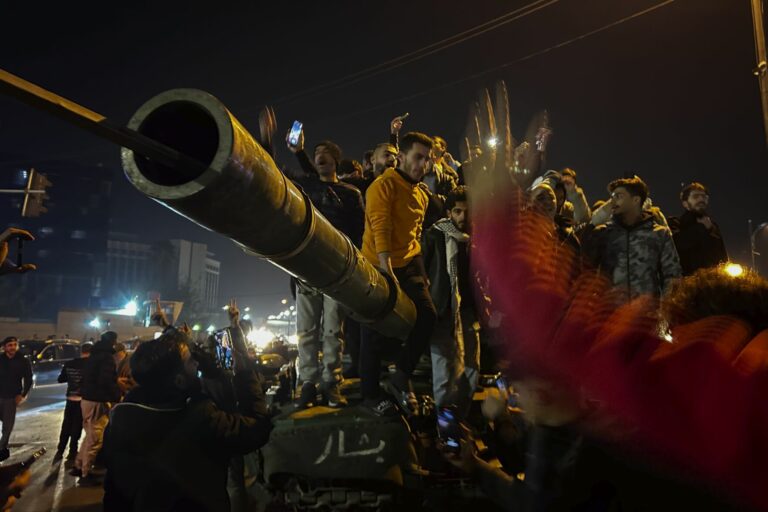
In a dramatic turn of events in Syria, former leader Bashar Assad has fled to Moscow and received asylum, according to Russian media reports, following a rapid rebel victory in Damascus that has ended Assad’s family’s half-century dominance over the nation. Celebrations erupted across Syria as people took to the streets, evoking memories of the Arab Spring before it descended into a long and bloody civil war lasting nearly 14 years.
This upheaval raises questions about Syria’s future and the broader Middle East context. U.S. President Joe Biden hailed the events as shifting the region’s power dynamics and weakening Assad’s allies, including Russia, Iran, and Hezbollah. He described Assad’s ouster as a “fundamental act of justice” but also warned of the accompanying risks and uncertainties, noting the need to scrutinize the new rebel authority.
Reports from Russian news agencies Tass and RIA indicated that Assad, along with his family, arrived in Moscow after negotiating his departure and peaceful transition of power in Syria. Syrian insurgent groups, responsible for this change, have reportedly assured security for Russian military and diplomatic sites in the country.
Abu Mohammed al-Golani, leader of Syria’s largest rebel faction and former al-Qaida affiliate, now stands at the forefront of shaping Syria’s future. Despite the challenges posed by various armed factions and longstanding regional rivalries, al-Golani, now called Ahmad al-Sharaa, claimed the downfall of Assad as a “victory to the Islamic nation.”
Amid these developments, Syrian state television declared Assad’s removal and announced the liberation of prisoners, urging citizens to safeguard the emerging “free Syrian state.” Video footage circulated showing the release of women and children from the notorious Saydnaya prison amidst emotional reunions with families.
In an effort to maintain unity and prevent revenge attacks, rebel commander Anas Salkhadi, speaking on state TV, underscored Syria’s inclusive future for all its ethnic and religious communities. Residents in Damascus expressed disbelief at the swift change but welcomed the rebels with celebrations marked by chants and car honking, despite concerns about potential retribution.
The progress made by the rebels over recent days, culminating in the fall of key cities, was unprecedented in recent years and led to the retreat of Syrian military forces. Notably, Assad’s departure represents a significant setback for Iran and its affiliates, who found themselves overstretched in regional conflicts and voiced concerns about Syria’s stability and potential fragmentation.
As the urgency for political transition grows, Syria’s Prime Minister has promised cooperation with the opposition, while international leadership, including the U.N. and several countries with vested interests, are working towards fostering a peaceful transition. In the midst of these shifts, Israel has taken security measures in the Golan Heights, while diplomatic efforts persist to address and stabilize the situation in Syria.