**By Milly Chan, CNN**
(CNN) — Amid the din of cheering crowds, rhythmic chanting, and the beats of taiko drums, hundreds of people race through the streets of Osaka, hauling massive wooden floats. This chaotic event is part of the “danjiri matsuri,” or float festivals, celebrated in the Japanese prefecture of Osaka.
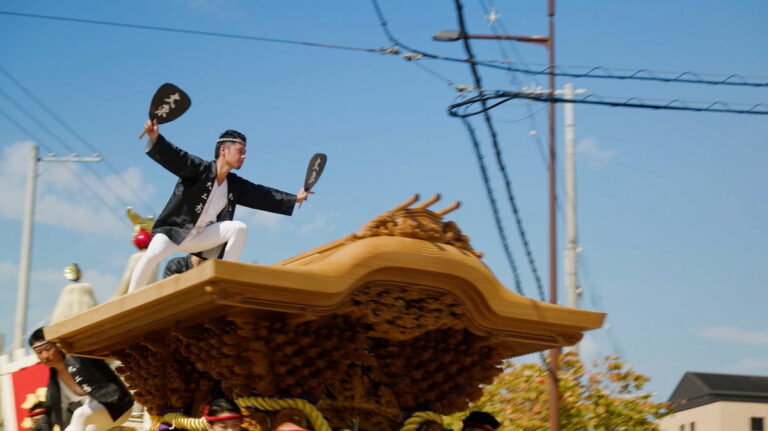
Held over several weeks in October, these festivals are known to be among the most hazardous on Japan’s festival calendar. The floats, each weighing several tons, are often navigated around tricky corners, sometimes resulting in accidents. The events can be particularly dangerous for participants riding atop these fast-moving floats, known as “daikugata.”
“Danjiri can sometimes topple over or collide, and I’ve witnessed daikugata falling,” shares Shinya Ogura, a seasoned danjiri rider from Osaka’s Otori region. He finds the exhilarating view and the challenge of staying atop the float to be part of the festival’s addictive allure.
“I think it’s a very rewarding position,” Ogura says. “My grandfather and father have been involved since I was a child, and I’ve carried on the tradition.”
Estimated to have begun around 300 years ago, the festivals were originally a means for local communities to ward off illness and bad luck or to pray for a bountiful harvest.
**A Tradition of Craftsmanship**
For centuries, danjiri festivals have also celebrated the art of woodworking. The term “daikugata” translates as carpenter, and this esteemed role was once reserved for those who crafted the floats. Each float is painstakingly adorned with hundreds of hand-chiseled figures.
Today, artisans like Akihiko Maeda continue this tradition. The 48-year-old ceased riding the floats about a decade ago but remains dedicated to building and restoring them for Osaka communities.
“I’ve been focused on danjiri craftsmanship for many decades,” says Maeda. “I strive to capture dynamic poses in the sculptures, making them seem alive.”
Crafting a custom danjiri can take five years, with districts investing around $650,000 for each one. Once built, a danjiri is typically used for 70 to 80 years, according to Maeda.
Despite the rich tradition, demand for Maeda’s work is waning, paralleling the decline in festival participants. Japan’s decreasing birth rates are shrinking the population, and by 2020, nearly 28% of Osaka’s residents were over 65, far above the global average of just over 9%.
Kazuma Nakao, a veteran of over 40 years of participation in the Otori festival, notes the struggle to find enough physical participants to maneuver the floats. “We need to borrow participants from other districts. Every town faces this challenge now,” he explains.
However, the current participants, though fewer, make up for their numbers with enthusiasm. Some even join in multiple town festivals back-to-back, an endurance feat extending into the evening.
Ogura is hopeful that by raising global awareness of danjiri festivals, these traditions will endure for future generations. “I want international visitors to see these events when they come to Japan,” Ogura expresses. “I hope it remains a festival that children can cherish.”
The-CNN-Wire™ & © 2024 Cable News Network, Inc., a Warner Bros. Discovery Company. All rights reserved.