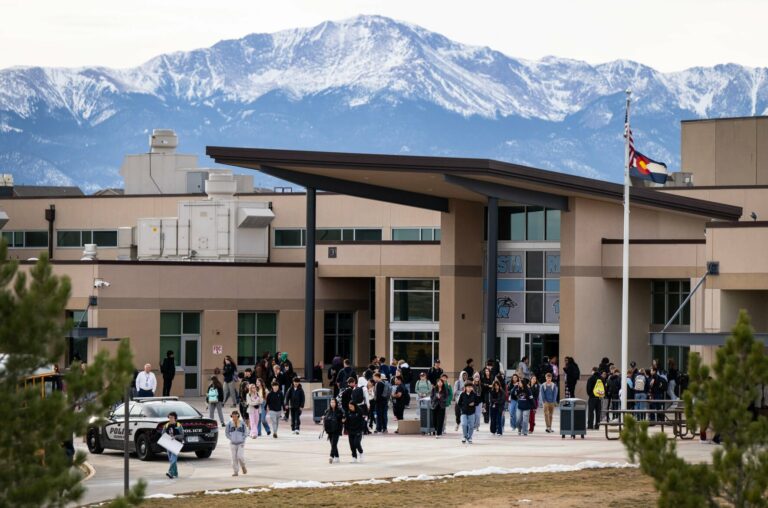
Following executive orders from the Trump administration, El Paso County’s largest school district, School District 49, is contemplating a resolution that could influence discussions statewide and nationwide. During a recent board of education work session, they discussed a resolution that aims to update policies to recognize two distinct biological sexes separate from gender identity and expression. This resolution specifically addresses the use of school lockers, bathrooms, and participation in sports based on biological sex.
This initiative mirrors a resolution passed by the Woodland Park RE-2 district, influenced by an executive order from President Trump stating, “It is the policy of the United States to recognize two sexes, male and female,” and indicating that federal funds should not promote gender ideology. The resolution also refers to another executive order, “Ending Radical Indoctrination in K-12 Schooling,” which threatens to cut federal funding for alleged unlawful and discriminatory practices related to gender ideology.
The draft resolution, titled “Protecting Safety and Privacy for Boys and Girls in All School Settings,” is intended to support safety, equality, and privacy principles within educational environments. Despite concerns over potential funding loss, Board President Lori Thompson emphasized addressing privacy and safety issues that have existed for decades in school settings.
While similar resolutions are scarce in Colorado, D-49’s attorney, Brad Miller, noted that several schools and districts have expressed interest. A significant concern is alignment with the Colorado High School Activities Association (CHSAA) and state law, particularly regarding Title IX compliance and Title IX within schools.
CHSAA’s guidelines for the 2024-25 school year allow transgender student-athletes to participate in interscholastic activities without discrimination, with a process for determining gender assignment. Some board members question the necessity of the resolution, describing it as “performative and unnecessary,” given the existing legal frameworks and the limited scope of students affected.
Superintendent Peter Hilts noted that the procedures related to transgender students are individualized and care-focused, with parental involvement. Given state laws prohibiting discrimination and decisions protecting transgender students, some board members question the essentiality of the resolution, especially with the significant proportion of funding coming from state sources.
Community response has been mixed, with representatives from local LGBTQ+ support organizations expressing concerns that the resolution might unfairly target transgender students. Meanwhile, community members have engaged with board members for further discussions, resulting in the board delaying their vote to seek additional legal guidance. An updated resolution is expected to be reviewed in the April 10 meeting, with community members poised to continue addressing the issue. The resolution is seen as potentially setting a precedent or sparking similar actions in neighboring school districts.